Jeni Falldine
Apparel Designer | Textile Artist
Basic Sewing Supplies I Recommend For Beginner or Advanced Sewists
I’ve used a lot of different sewing tools over the years and I definitely have favorites! Here’s a list of some basics you might want to use in your own sewing room.
Please note, most of the links to my favorite products will take you to Amazon to purchase. As an Amazon Associate I earn from qualifying purchases. I support sourcing and purchasing any or all of these supplies from second hand shops, local brick-and-mortar businesses, or niche suppliers but if you prefer to shop on Amazon and purchase directly from my product links, I will earn a small commission for compiling these tool recommendations (which would be great for me because I can use that to buy more sewing supplies). Please support your local economy whenever you can!
SCISSORS
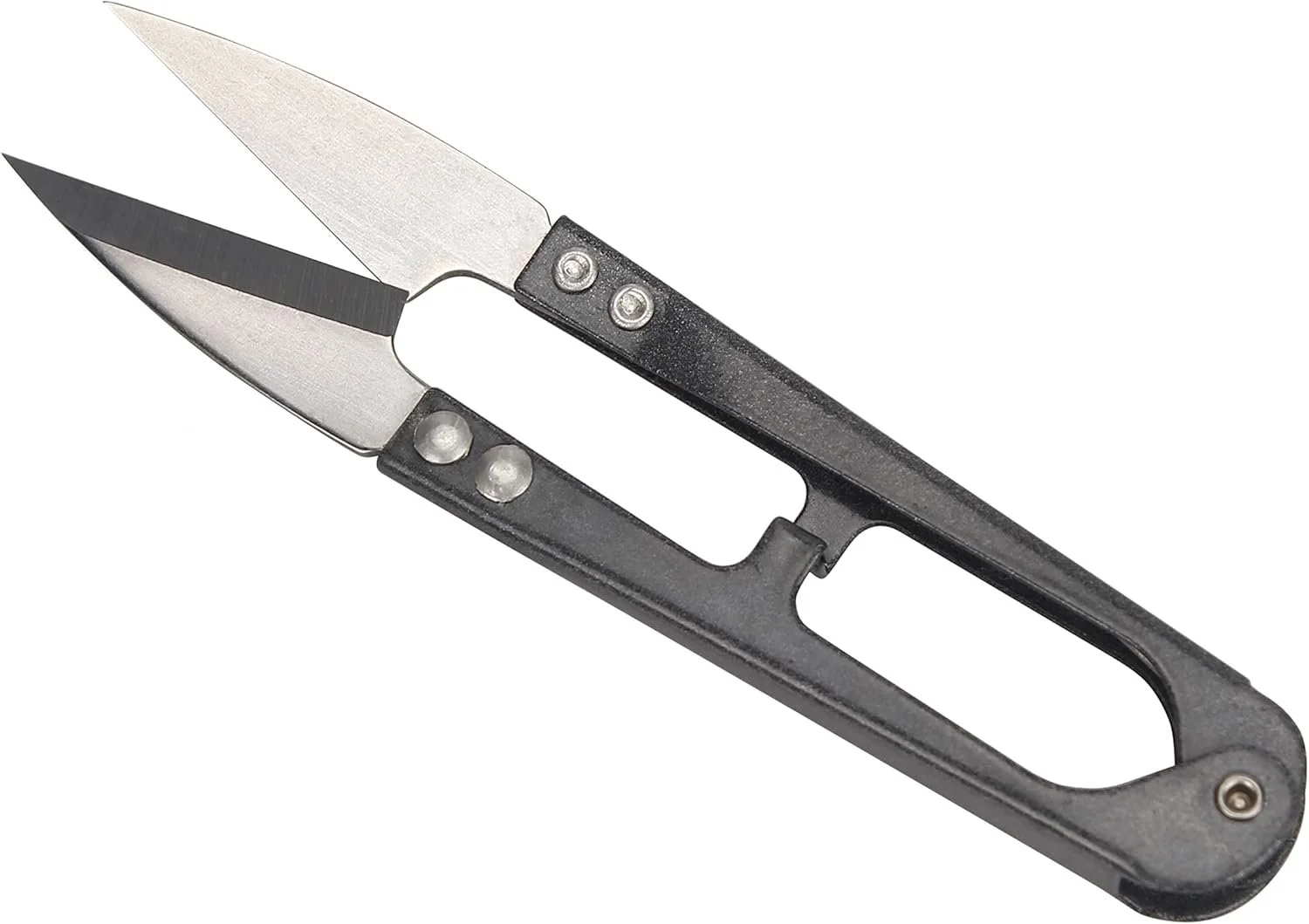
Spring Loaded Thread Snips
Set these right next to your sewing machine. Clipping loose threads will be so so satisfying!
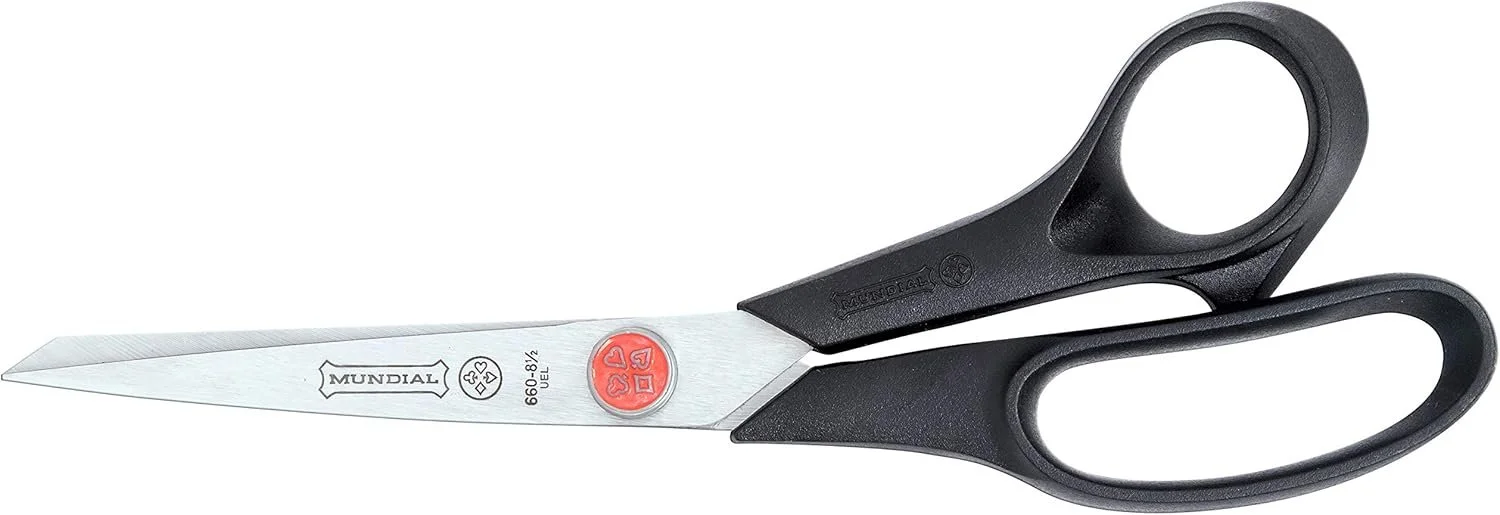
Fabric Scissors
Keep a sharp pair of scissors specifically for cutting out fabric. They don’t have to be expensive, just make sure you label them “Fabric Only” and don’t cut paper, cardboard, aluminum foil, or anything else with them because that will make them less sharp when you want to cut fabric.
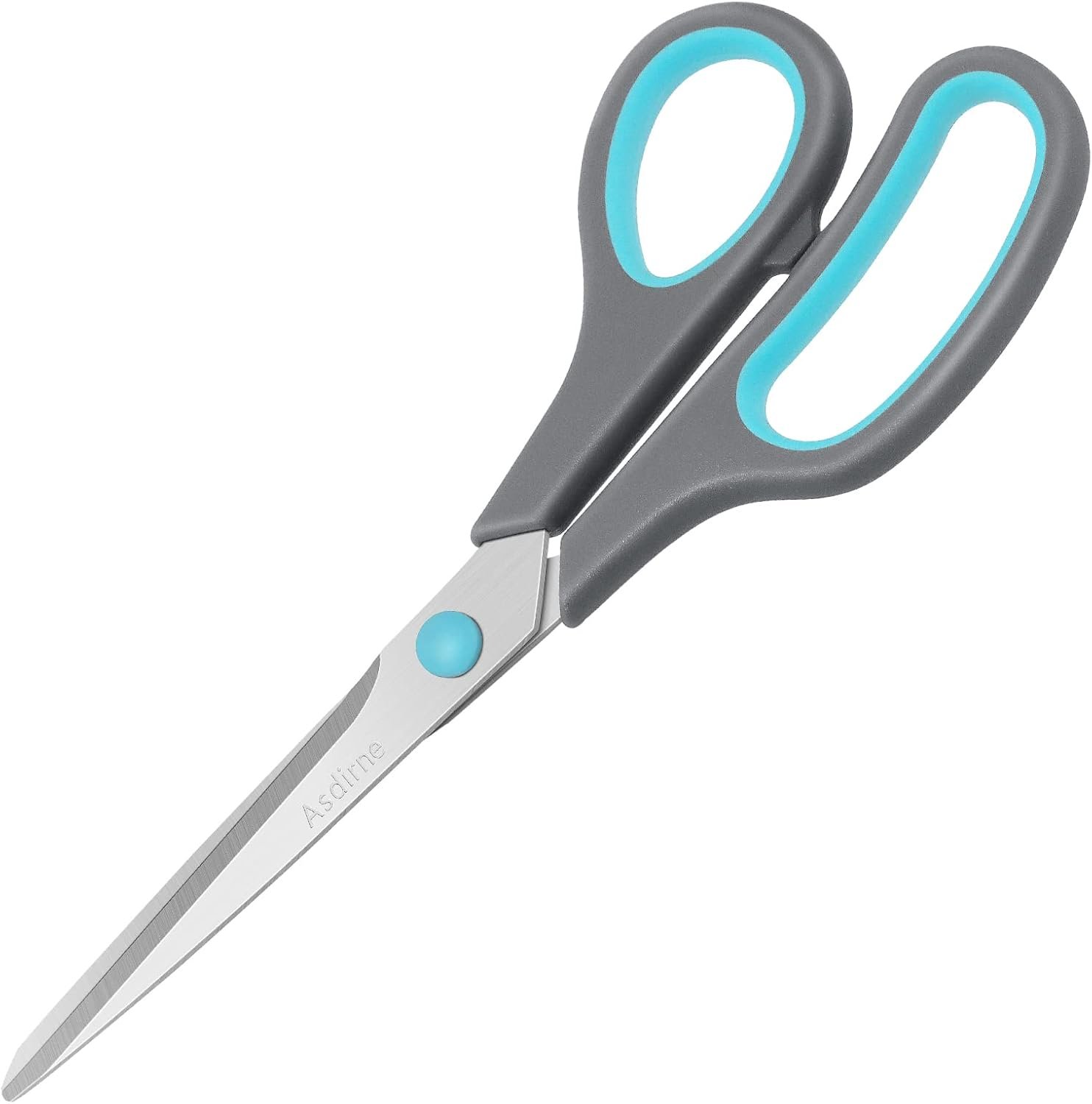
Paper Scissors
Please keep a separate pair of scissors nearby for cutting paper so you’re not tempted to use your fabric scissors. Anything all-purpose is fine.
NEEDLES AND THREAD
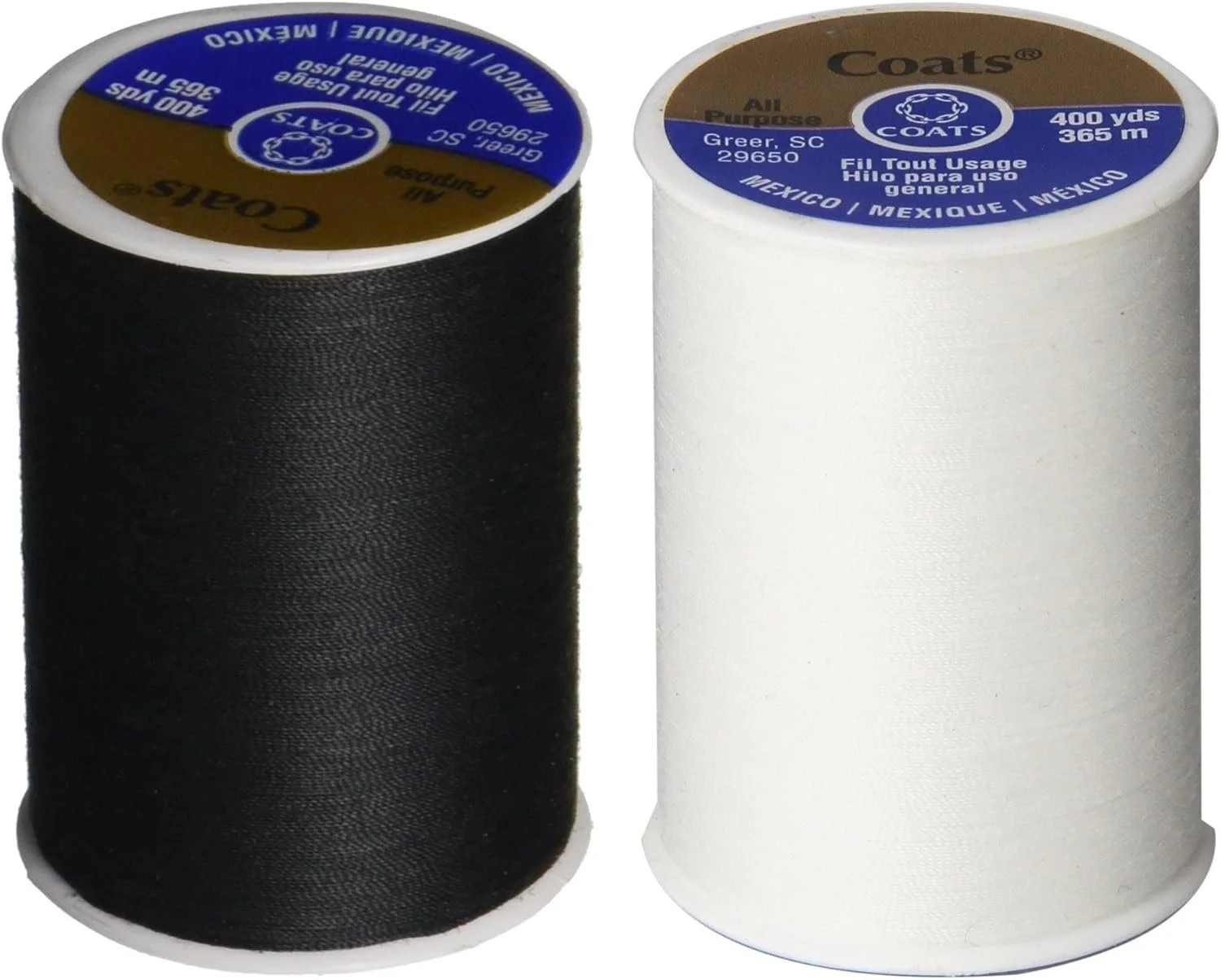
All-Purpose Sewing Machine Thread
I like 100% polyester thread because it is strong and slightly stretchy. All-purpose weight is good for most clothing and non-clothing projects and I keep it stocked it in a variety of colors in my sewing studio.
Be wary of vintage thread spools! Thread loses strength over time. Give your vintage thread a strength test by pulling it between your hands to see how easily it breaks before you use it on a project.
Heavy Duty Thread
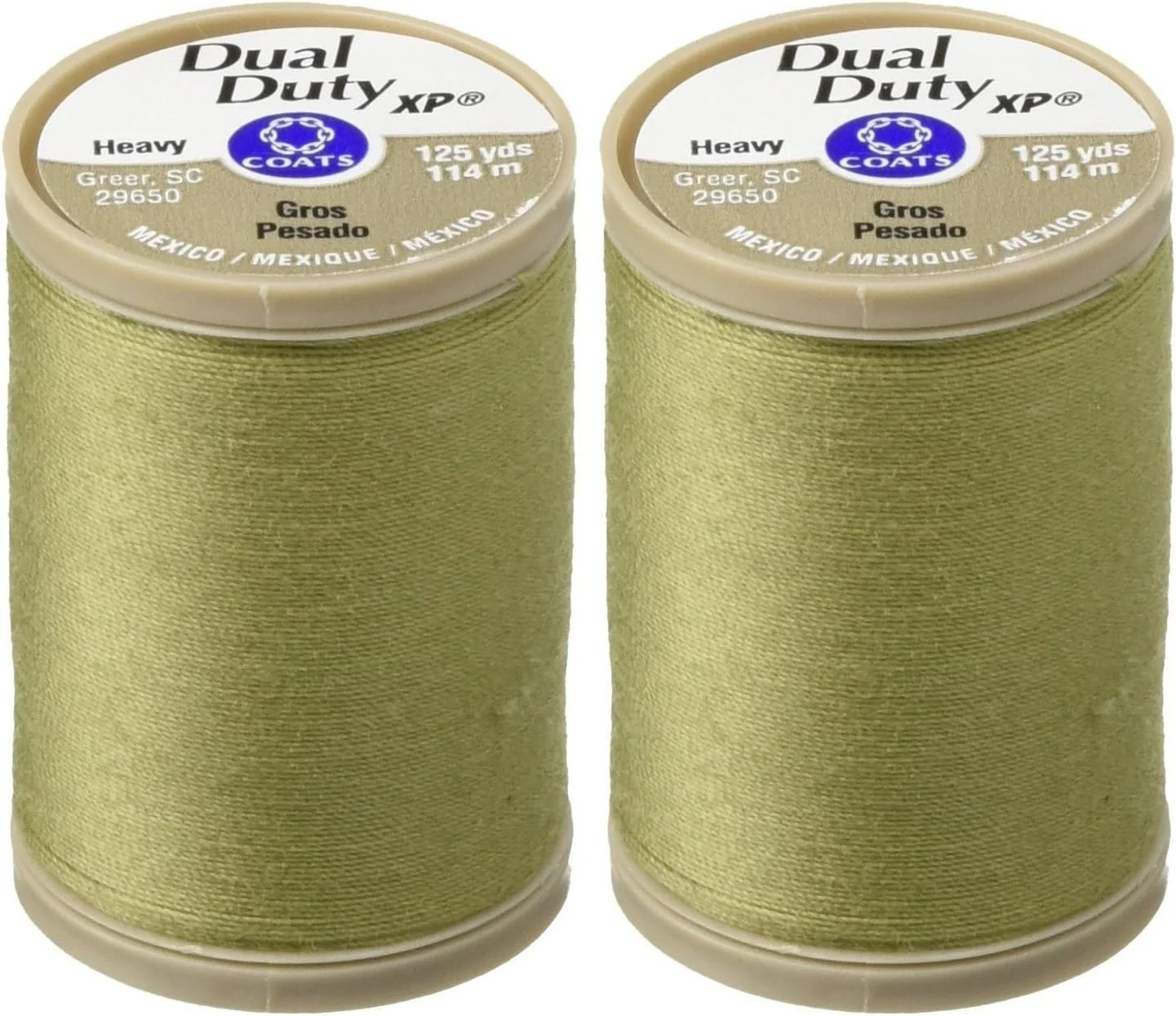
This is a thicker weight thread. It’s good to have around in a few basic colors to hand sew buttons back on.
Sewing Machine Needles
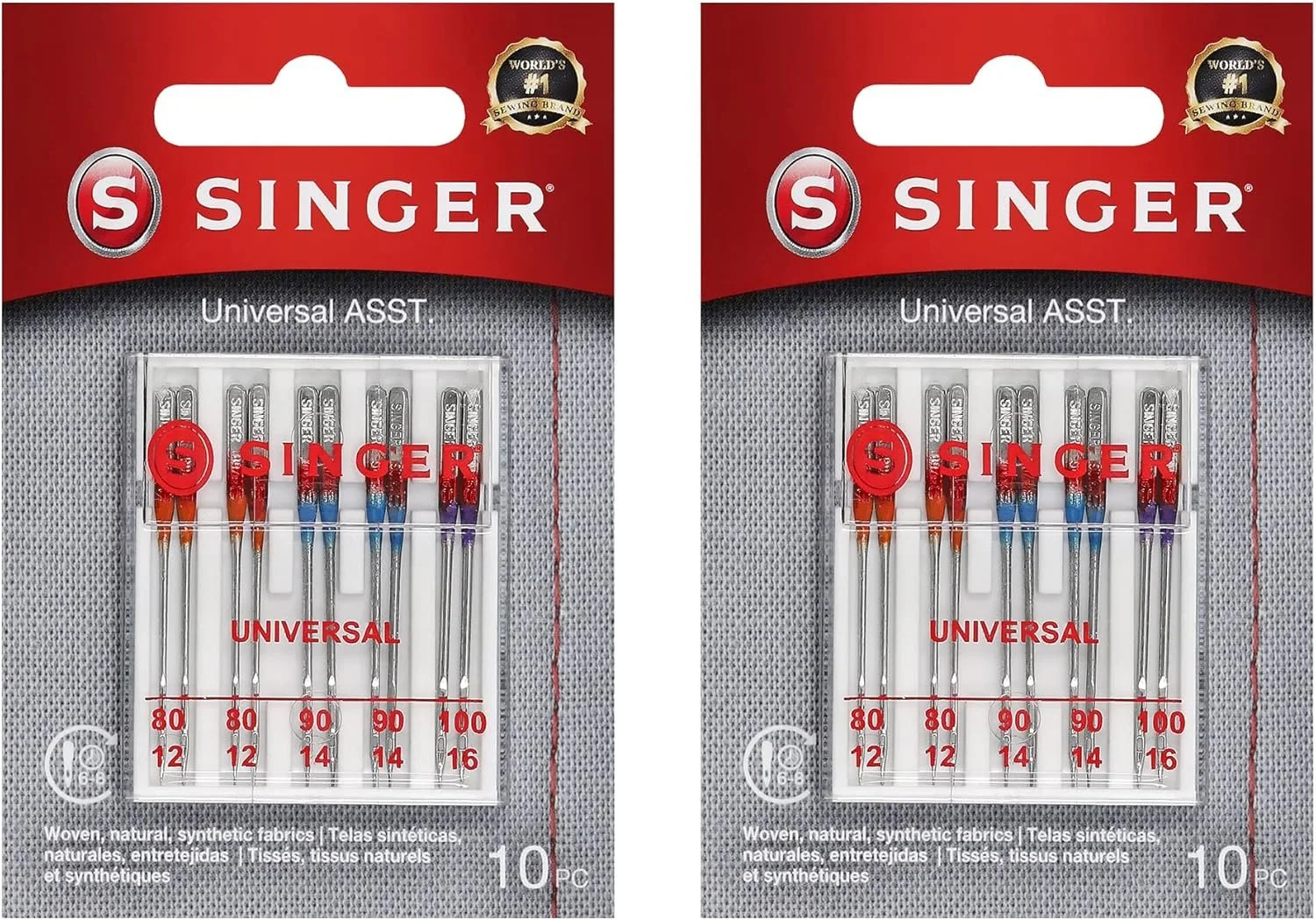
It’s helpful to have different sizes and types of sewing machine needles handy for different weights and types of fabric. It’s also useful to have extras around in case your needle breaks.
Get a variety of sizes: light, medium, and heavy weight in both ball point and universal for stretch and non-stretch fabrics.
The needle size is printed on the shaft of the needle but I find the print is difficult to read, so I like to buy color-coded needles like the ones made by Singer that I’ve linked below.
Most modern home sewing machines use needles with a standardized shank size that are commonly found at fabric and craft supply stores. If you have an industrial machine, a serger, or a very vintage sewing machine, you may need a specialized type of needle to work with your model. If this is the case, you’ll have to consult your owner’s manual or do some online searching to find the right needles for your machine.
Hand Sewing Needles
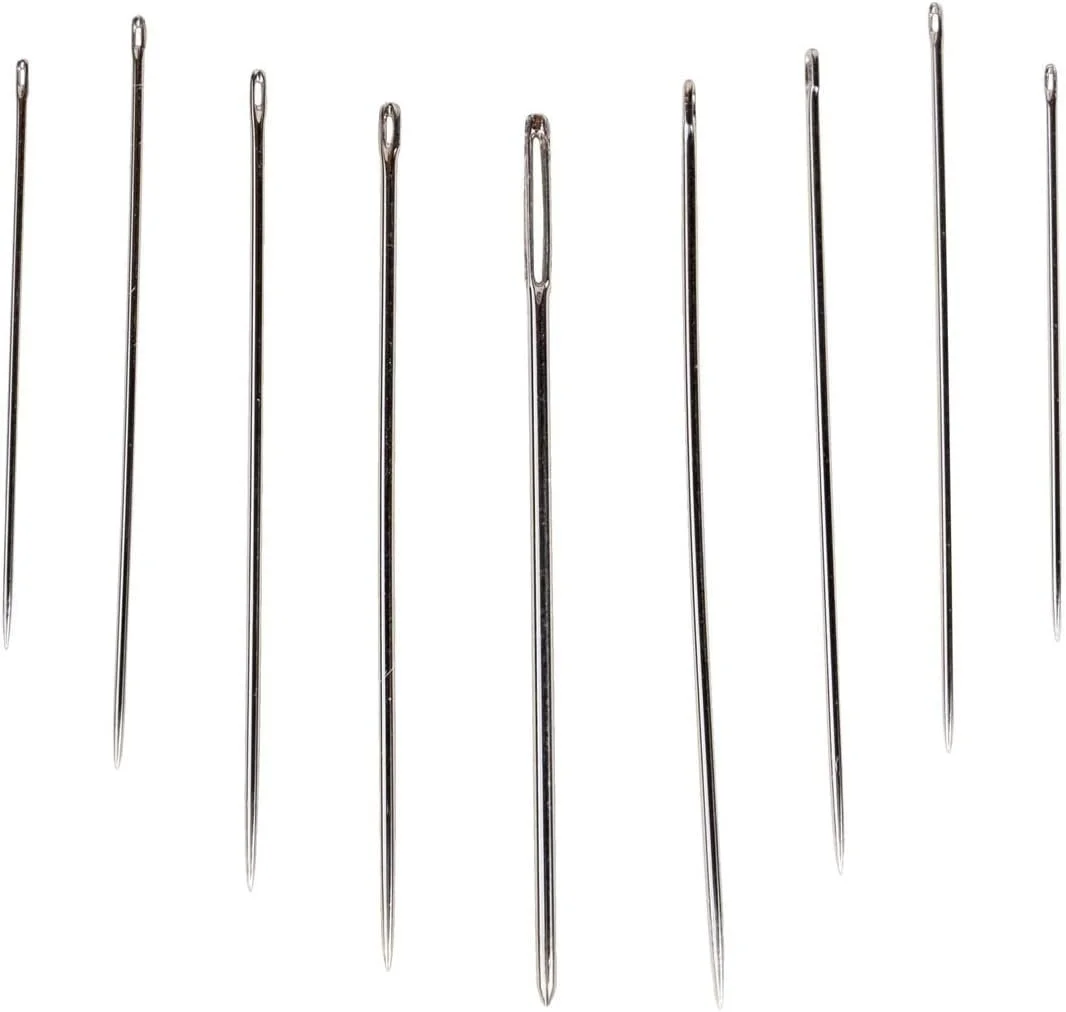
You should always have some hand sewing needles around for sewing on buttons, basting, and other small tasks that don’t require a machine. There are different types for embroidery, sashiko, hand quilting, upholstery, etc. but it is useful to have some all-purpose hand sewing needles available.
MEASURING TOOLS

Rulers
I recommend having at least one long ruler, at least 18”, preferably clear. I also like to keep a small 6” ruler around for measuring hem depths and seam allowances. (Sorry for those of you that use the metric system! The ones I have linked are in inches.)
Tape Measures
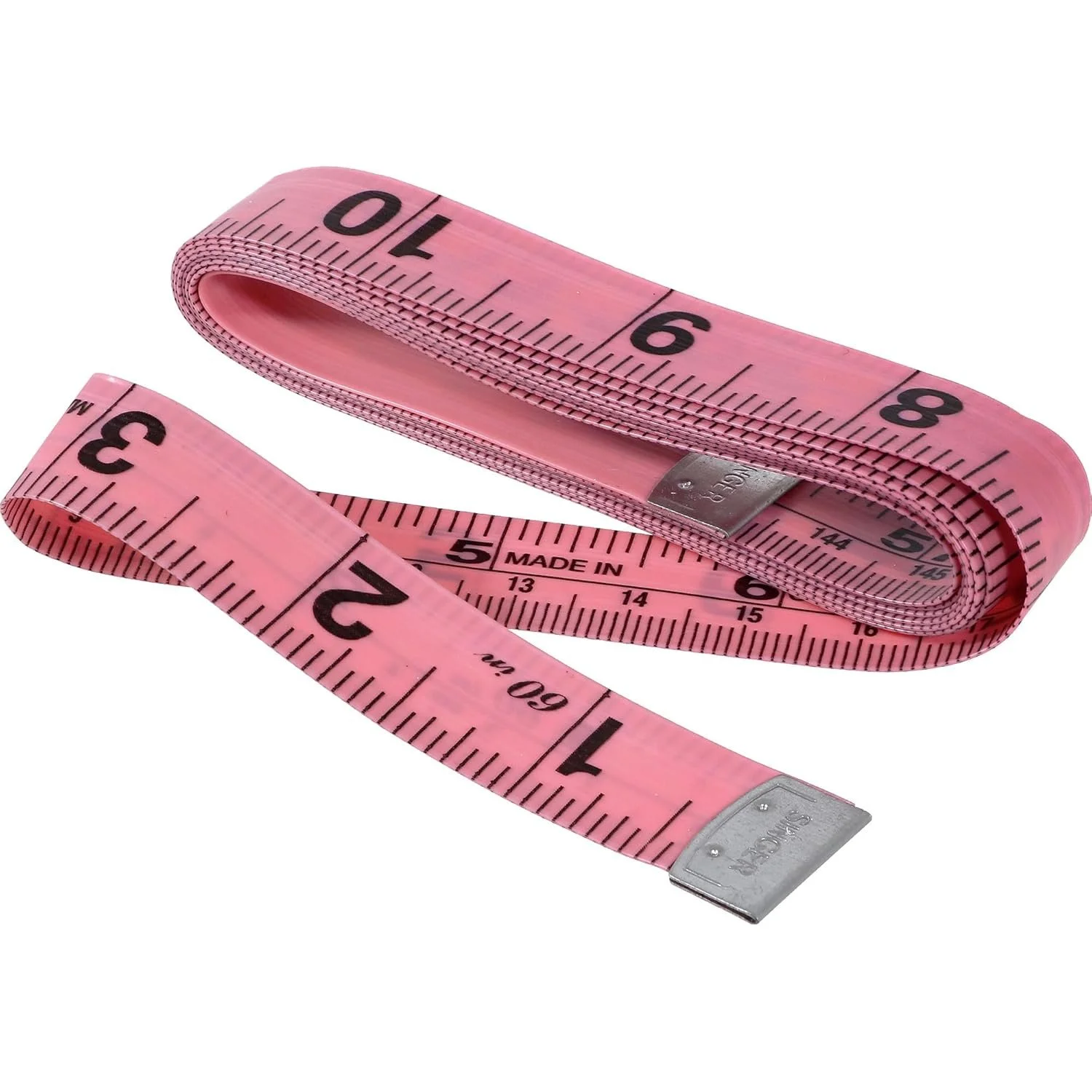
Simple dressmaker tape measures are soft and flexible, good for measuring around bodies: not like the retractable metal kind you use for home projects. I like to have a 60” and a long 120” one. They tend to wander away so it’s good to have a few.
OTHER NOTIONS
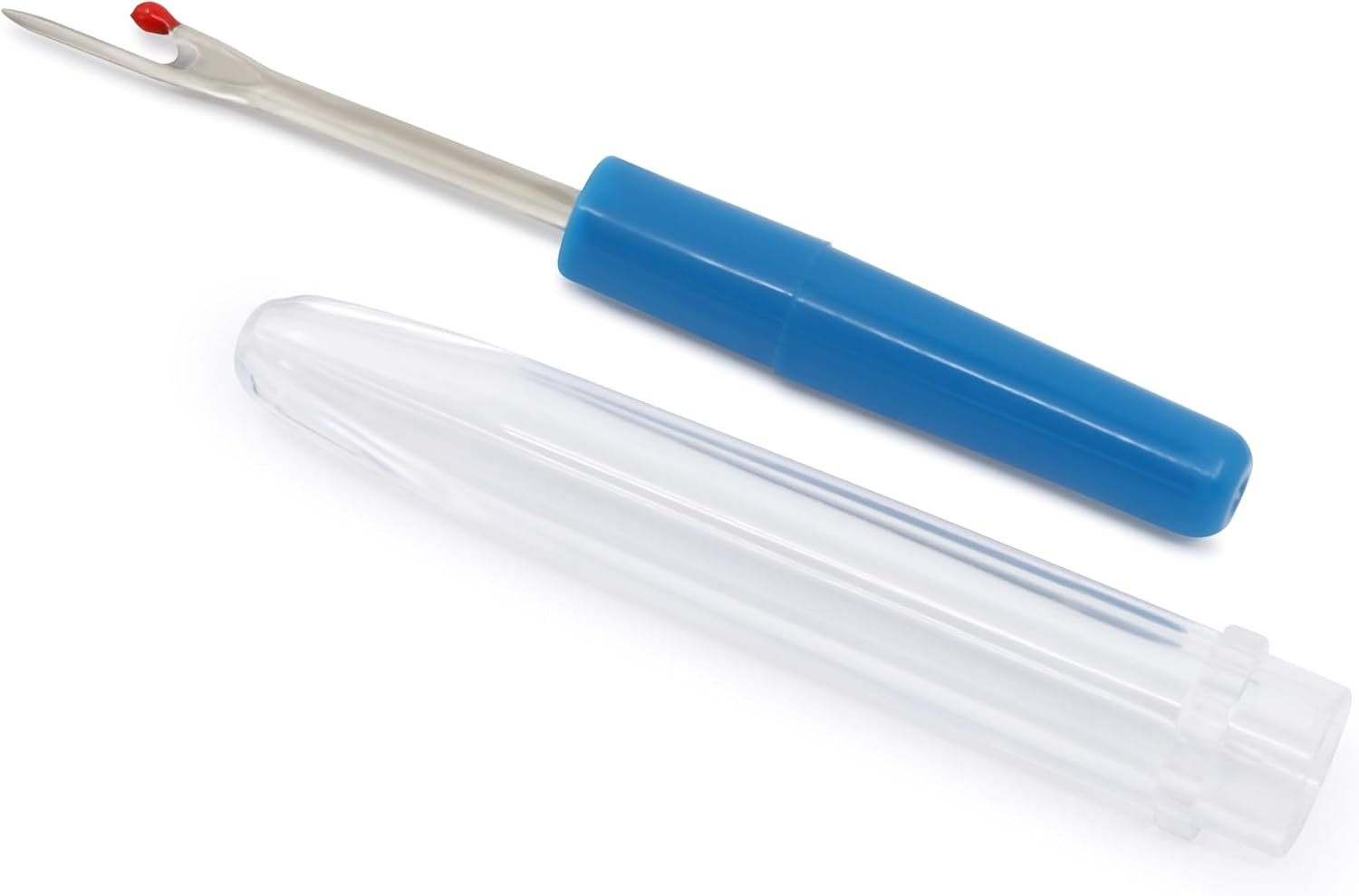
Seam Ripper
I hate to be the bearer of bad news, but a considerable portion of your sewing practice will be spent removing stitching. Sometimes you’ve sewn something up wrong and you have to take all of your work apart and redo it. Or sometimes you need to open seams for an alteration or up-cycling project. Get yourself a couple of these. Go ahead and splurge on an ergonomic one if you want. And get comfortable with using them.
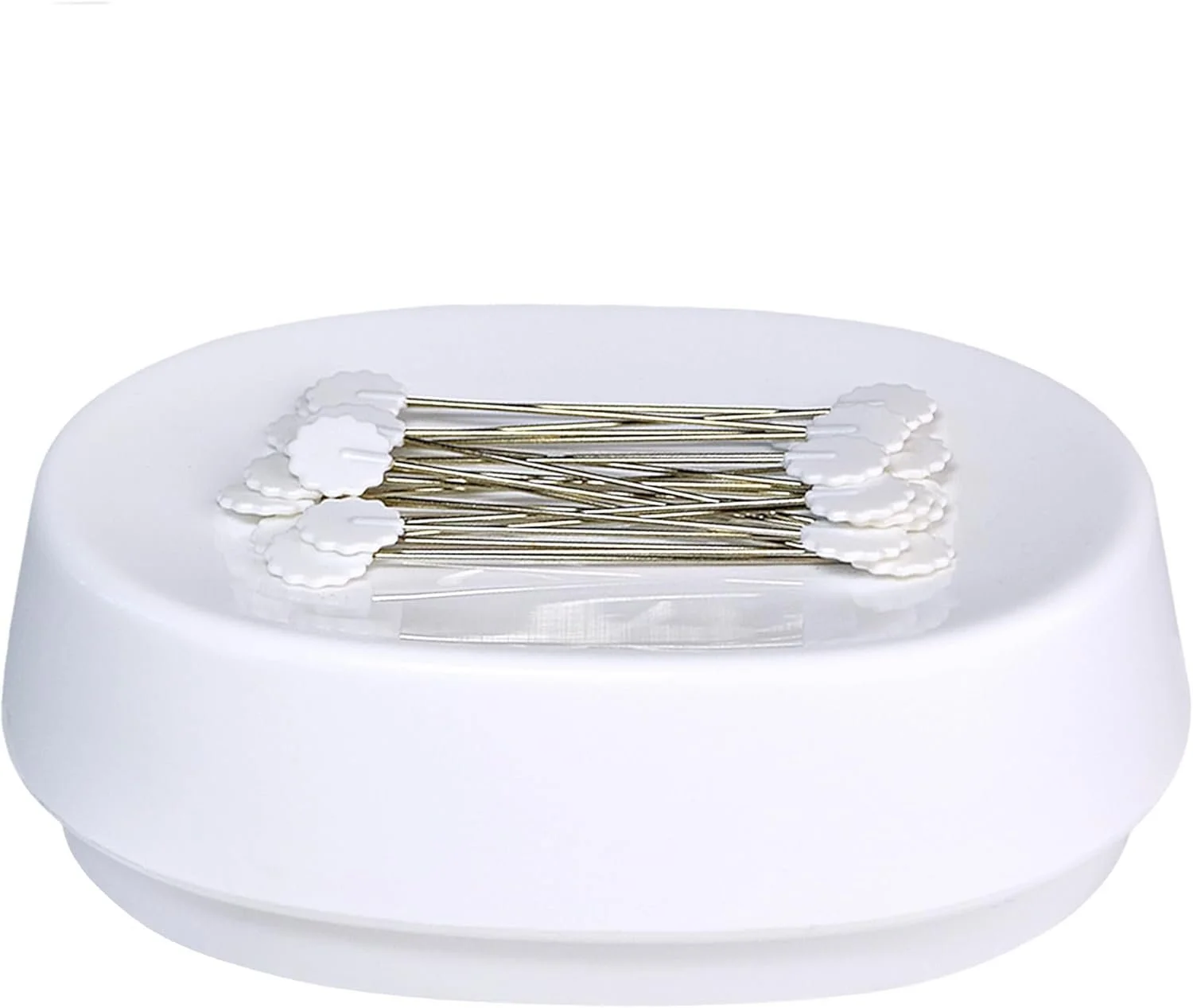
Pin Cushion
Tomato pin cushions are cute but I prefer magnetic ones.
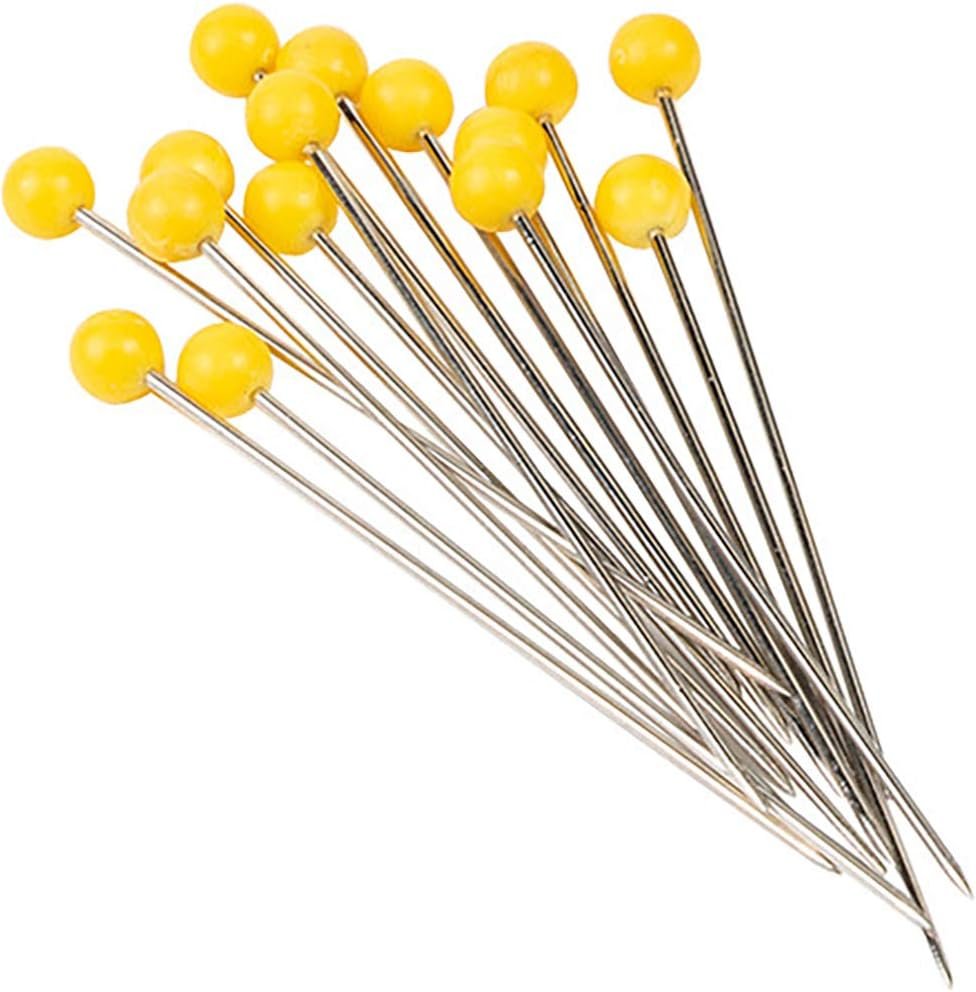
Ball Head Pins
I like pins with large, brightly colored ball heads because that makes them harder to lose. Used or vintage pins are fine, so long as they are sharp.
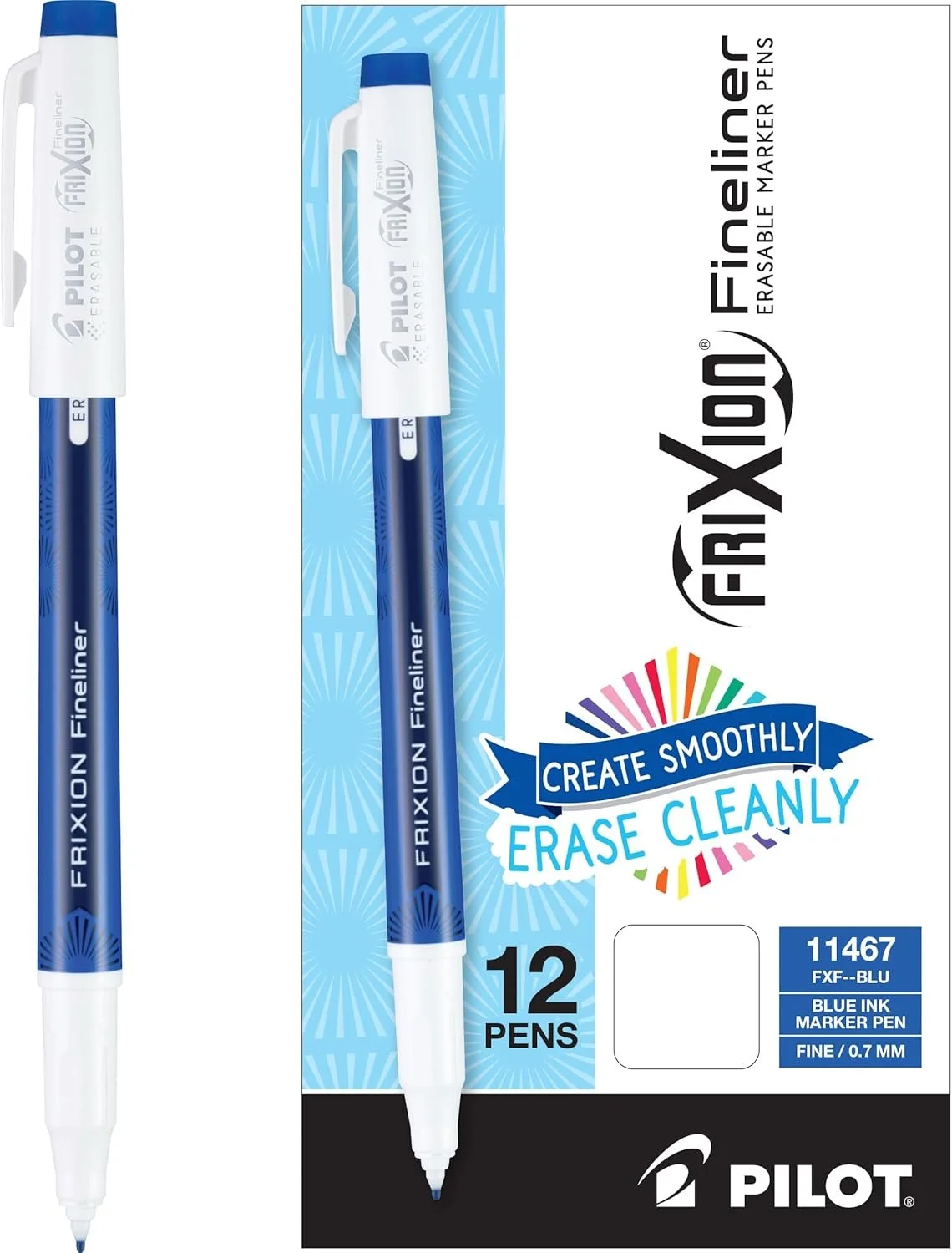
Fabric Marking Tools
You’ll want a dark color to mark on light colored fabrics, and a light or opaque color to mark on dark colored fabrics.
Frixion erasable pens are made for paper, but they work on fabric and will disappear with an iron. They come in a lot of colors.
Some tailor’s pencils and chalks can be a little more difficult to remove, but as long as the marks are in the seam allowance of your garment, it should be fine to use them.
Whatever marking tools you use, you might want to test first on a scrap piece of fabric and determine whether you can remove it before marking on a visible spot on your project.
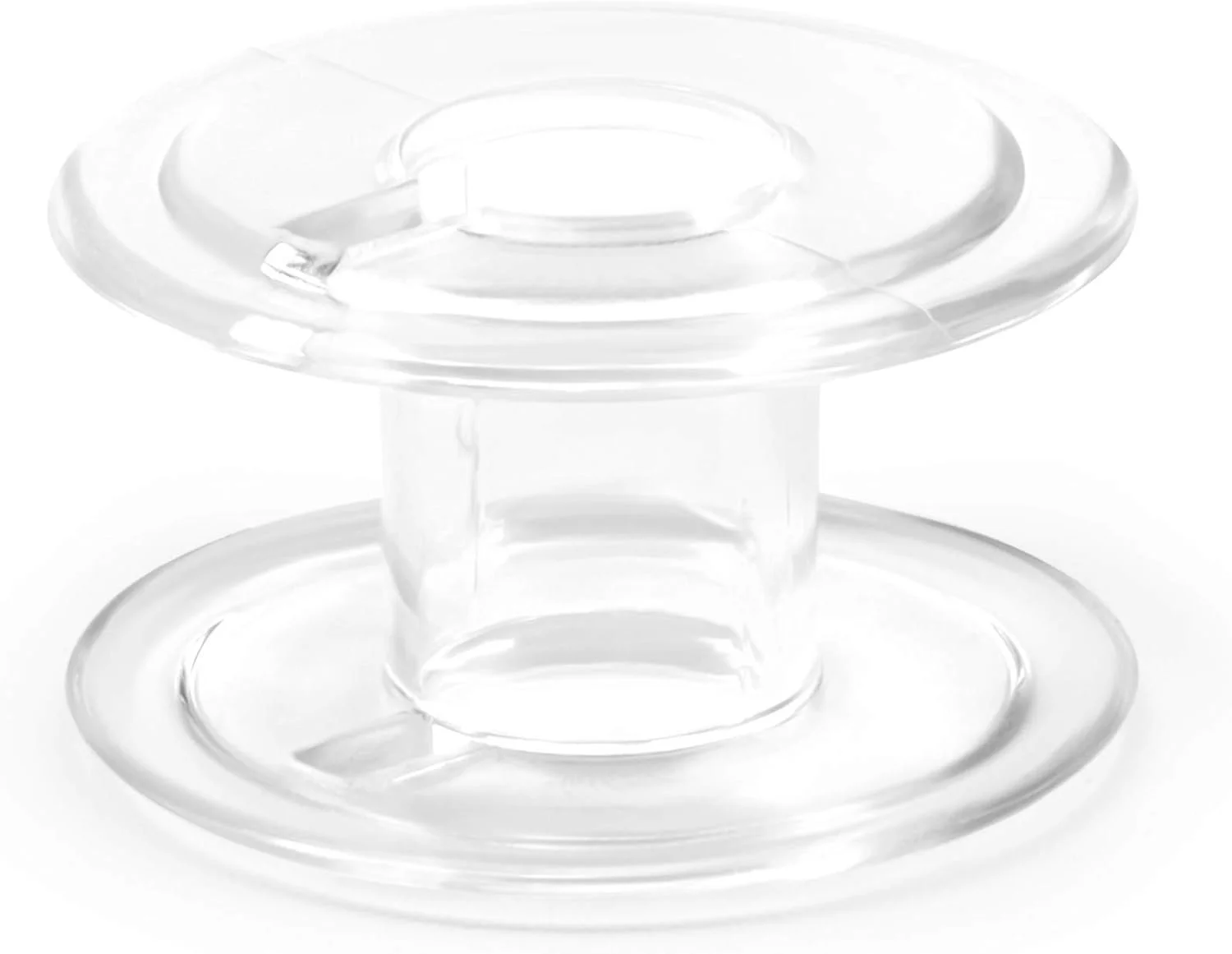
Bobbins
It’s good to have a lot of extra bobbins! Class 15, the size that I have linked here, is a very common size but bobbin sizes are not entirely universal. Check your sewing machine manual or search for your specific sewing machine online to find out what size bobbins your machine uses.
PRESSING TOOLS
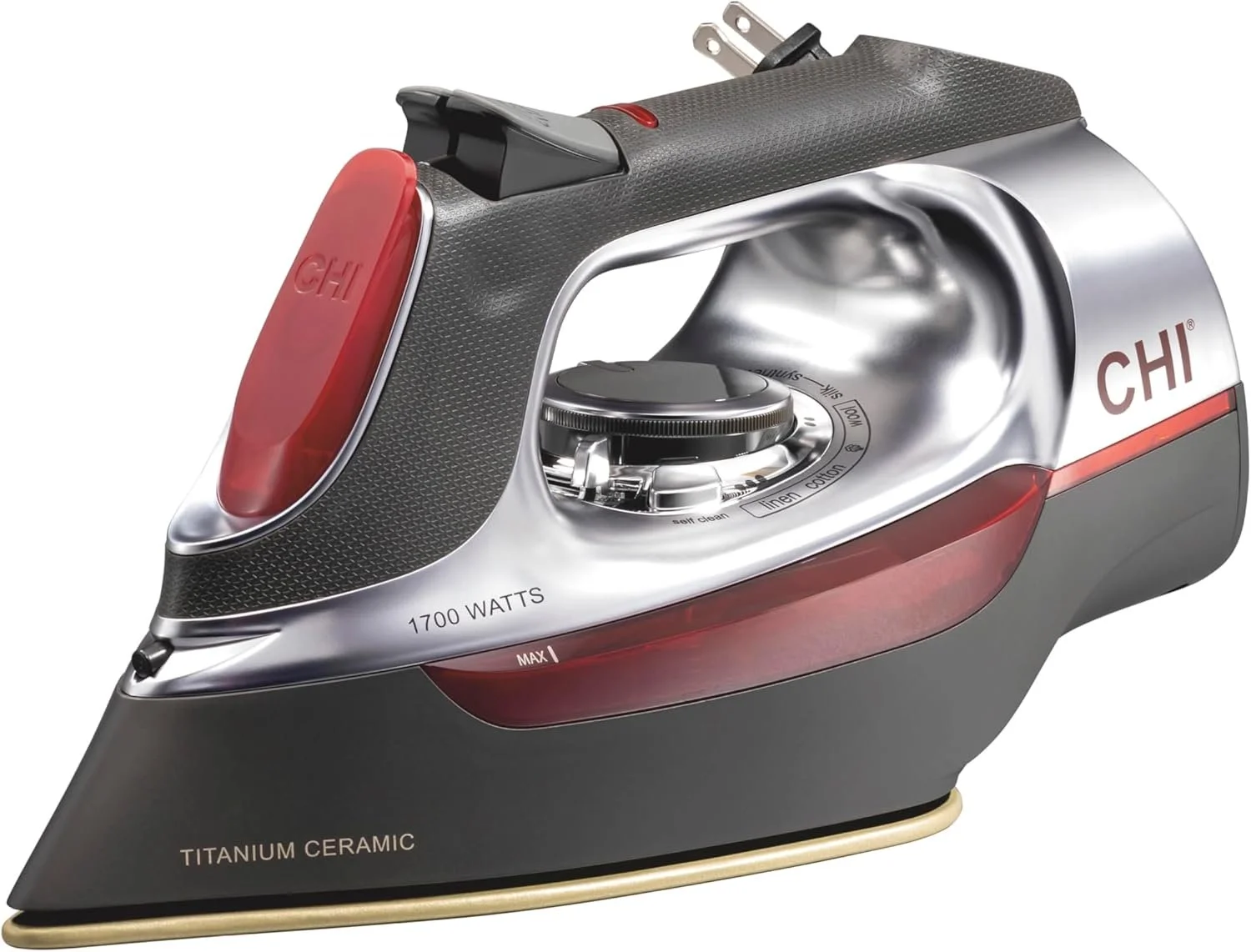
Steam Iron
Ironing is an important part of sewing! I like Chi irons. They heat up quickly and the steam is powerful.
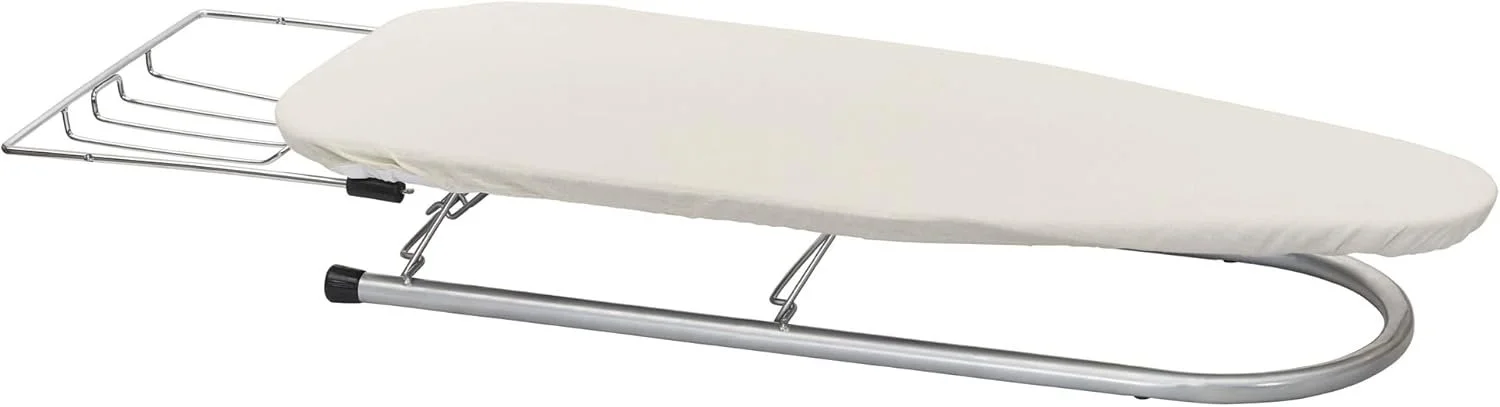
Ironing Board
If you don’t have space for a full-sized ironing board, you can get a small folding one to set on a table top.
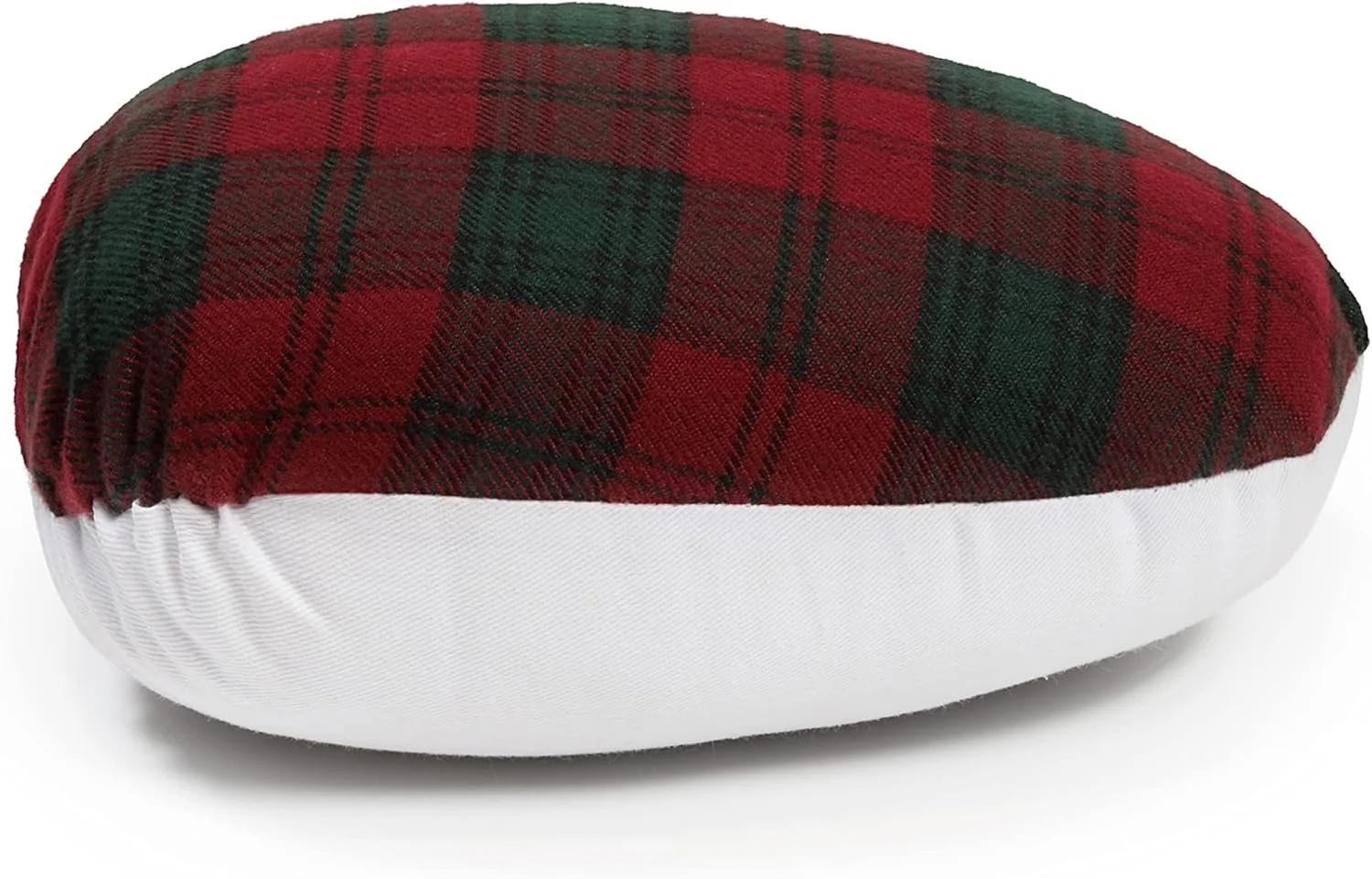
Tailor’s Ham
Good as a surface for ironing rounded areas and curved seams.
SEWING PATTERNS
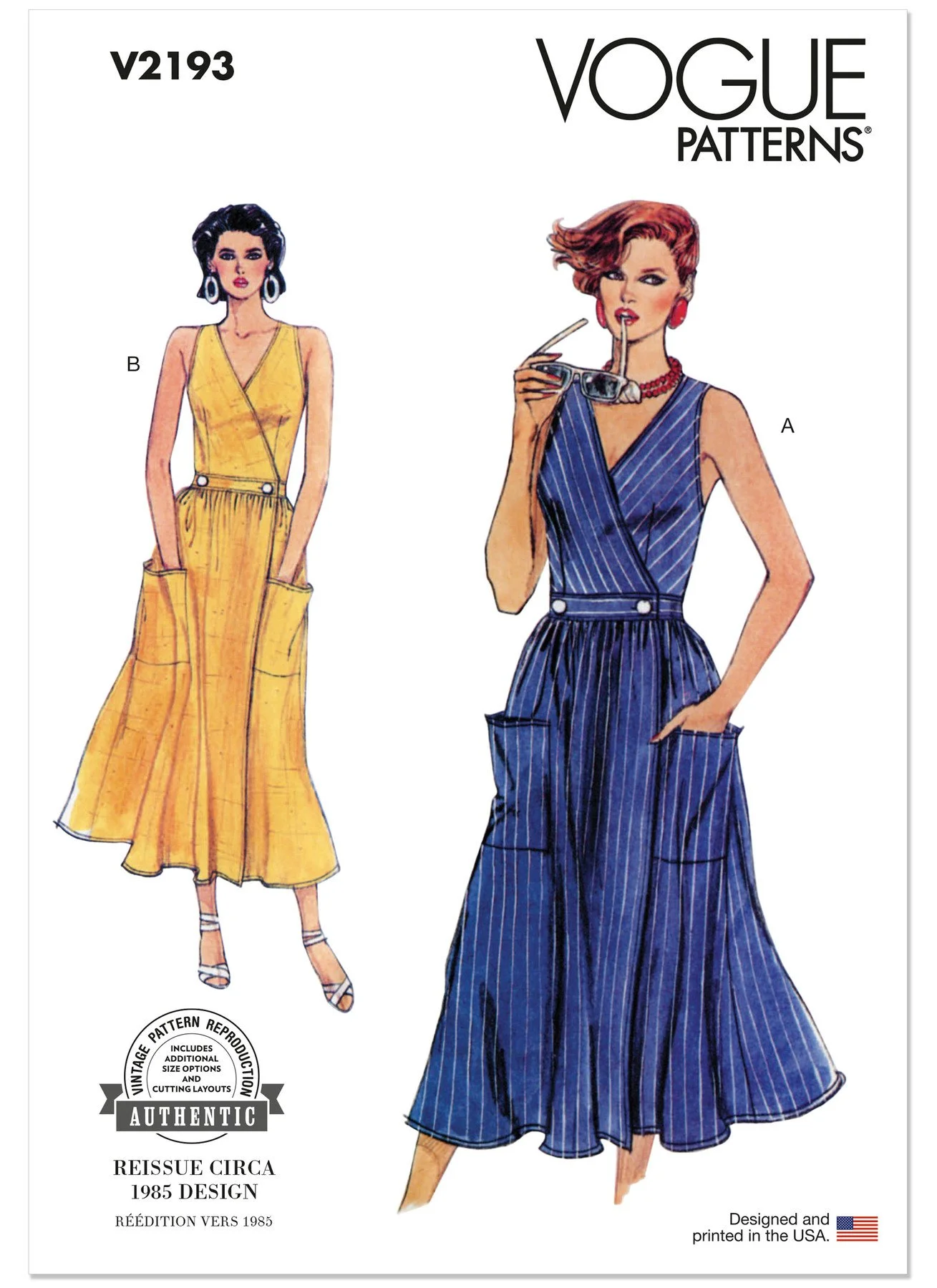
Commercial Patterns
I used to shop for clothing patterns at my local Joann store where I could look through the style books and then find my patterns in the large card catalogue style cases.
Since Joann closed, I have discovered I can shop for all of those patterns online on the Simplicity website. The site carries a large selection of patterns from Simplicity, McCalls, Butterick, Vogue, Know Me, New Look, and Burda Style. You can order a paper pattern to be shipped or purchase a digital downloadable pattern.
Search by category or keyword, there is a lot to choose from!
If you’re new to sewing, choose a pattern that says “Easy” “Learn to Sew” or “Kwik Sew” on the envelope.
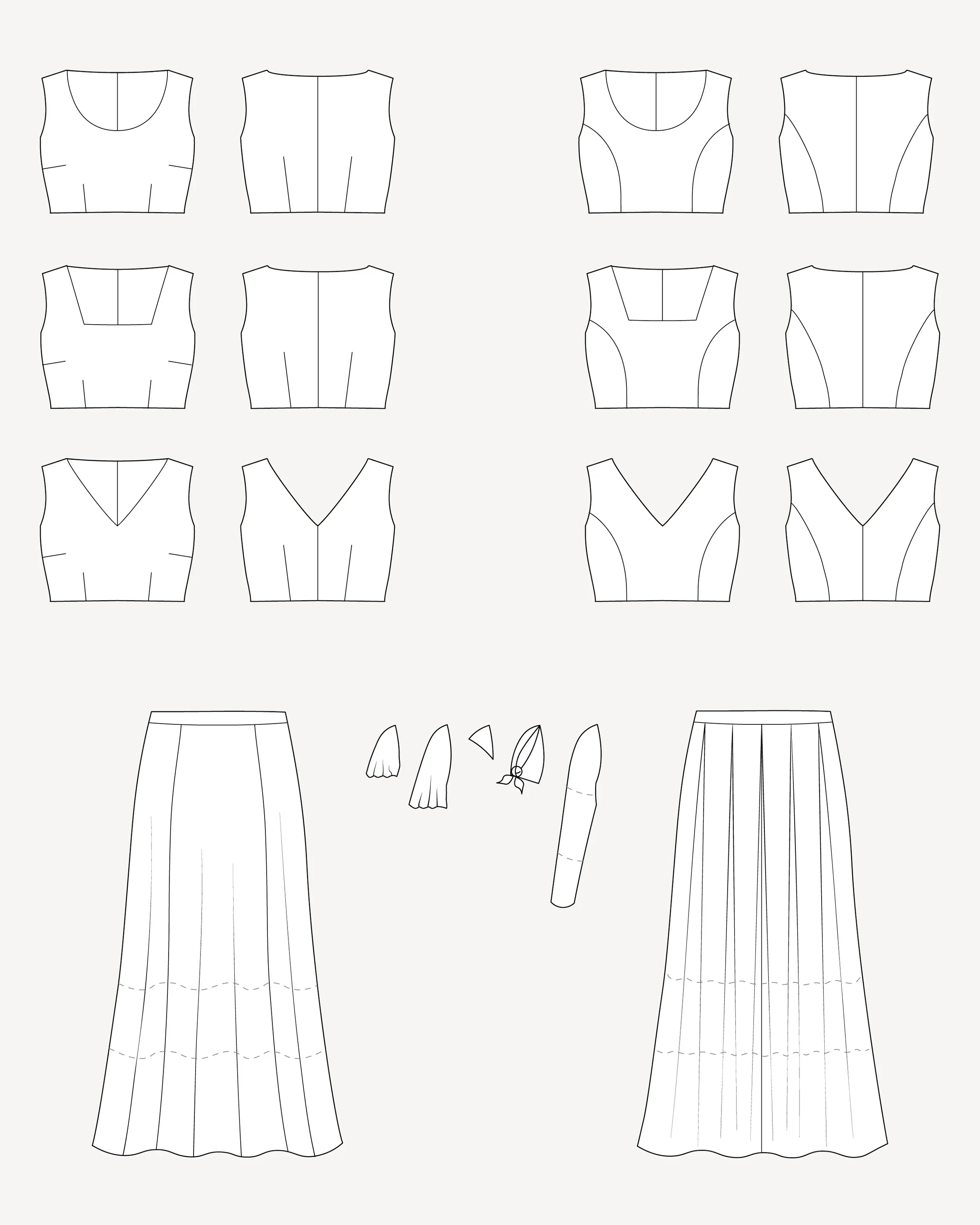
Independent Pattern Designers
There so many independent clothing designers and small companies offering creative, specialized clothing patterns to purchase. You can find new patterns to try on Etsy, through sewing influencers, from friends who sew, and through your local sewing shops. I’ve compiled a very small list of companies and resources below as a starting point.
Cashmerette specializes in curvy and plus-sized fits.
https://www.cashmerette.com
Friday Pattern Company makes fun designs that are size inclusive.
https://fridaypatterncompany.com
Charlie Darwin has a beautiful selection of patterns designed for linen fabric.
https://www.charliedarwintextiles.com/patterns
Tropical Research has fun clothing and bags.
https://www.etsy.com/shop/tropicalresearch
You can search Etsy for PDF patterns, they are usually pretty inexpensive. Beware, there are a fair amount of junk patterns that seem to be made by AI to watch out for on Etsy, so definitely check the customer reviews for a pattern before you purchase it and go to the trouble of printing it or trying to sew it up.
https://www.etsy.com
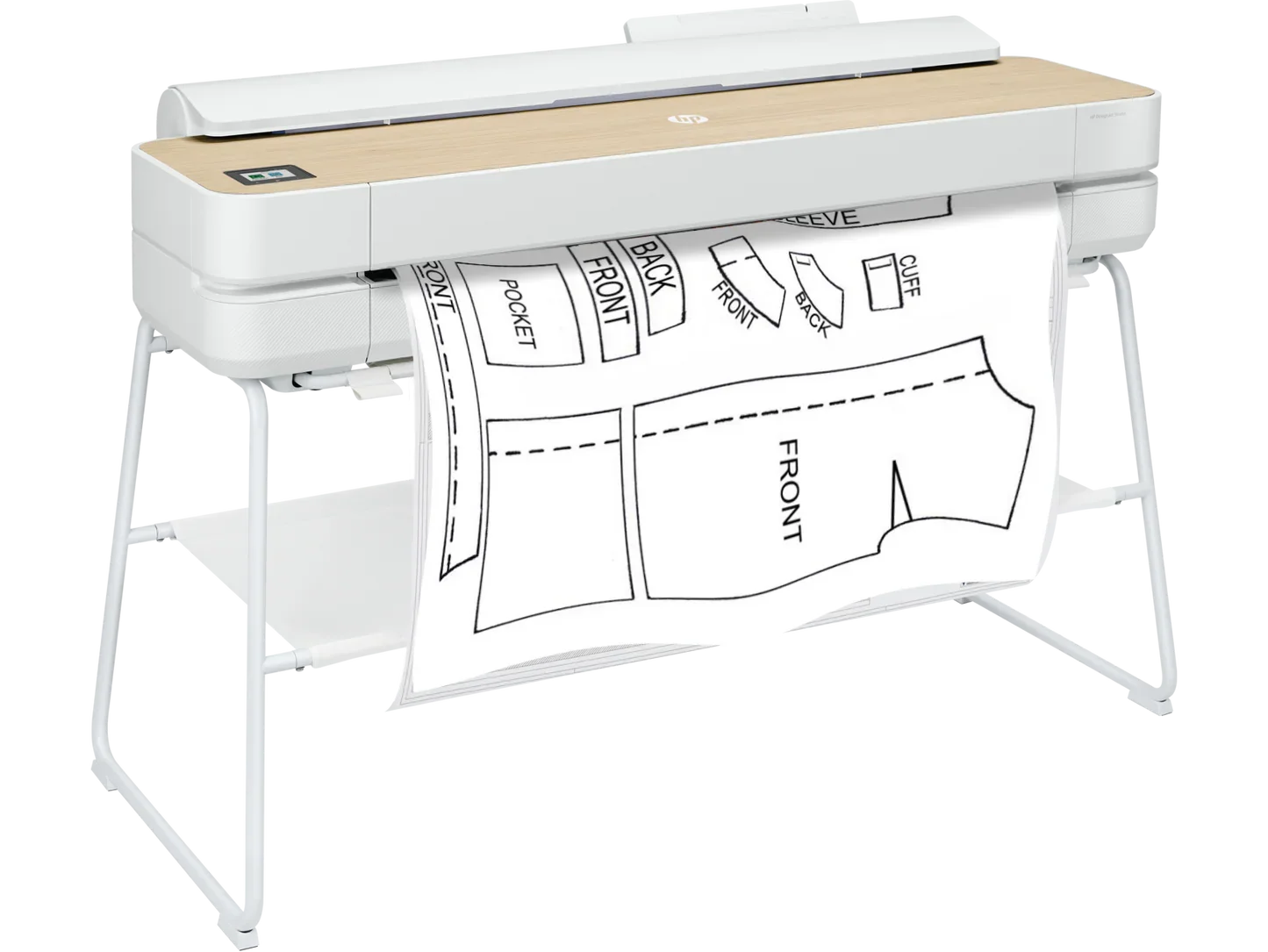
Printing PDF Patterns
It is time consuming to print PDF patterns on a home office printer and tape the pages together. I know of a few stores around Seattle with large format printers that can print your A0 format PDF patterns on full sized 48” wide paper. They all have options for either in-store pickup or shipping.
Our Fabric Stash in Pike Place Market
https://ourfabricstash.com/shop/pdf-pattern-printing/
Wyldwood Creative in Renton
https://wyldwoodcreative.com/products/pdf-printing
Pacific Fabrics in SODO
https://www.pacificfabrics.com/pdf-pattern-printing/
Wool Friends in Ballard (In store pickup only)
https://www.wool-friends.com/shop/pattern-printing
FABRIC
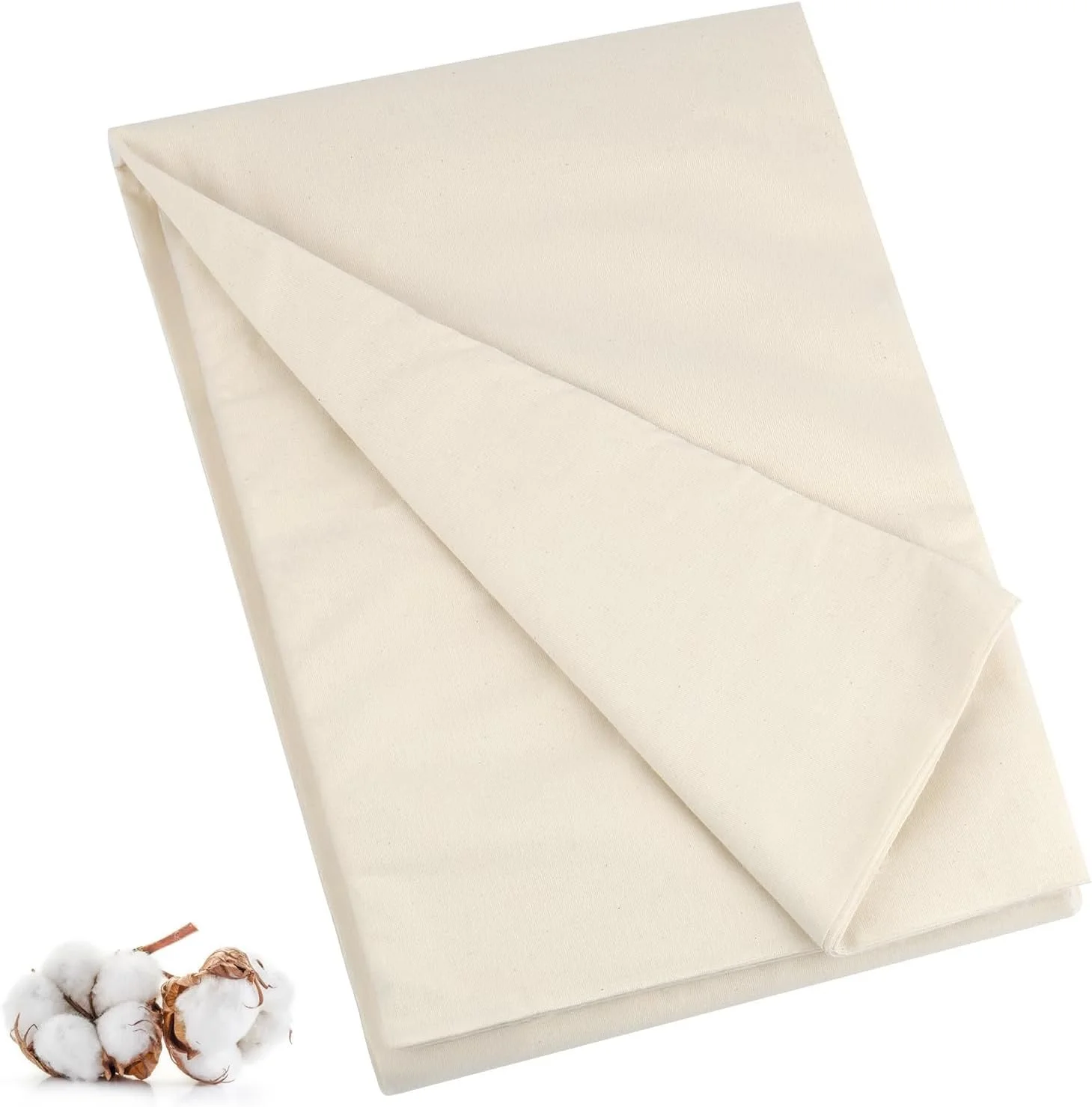
Muslin Unbleached Cotton
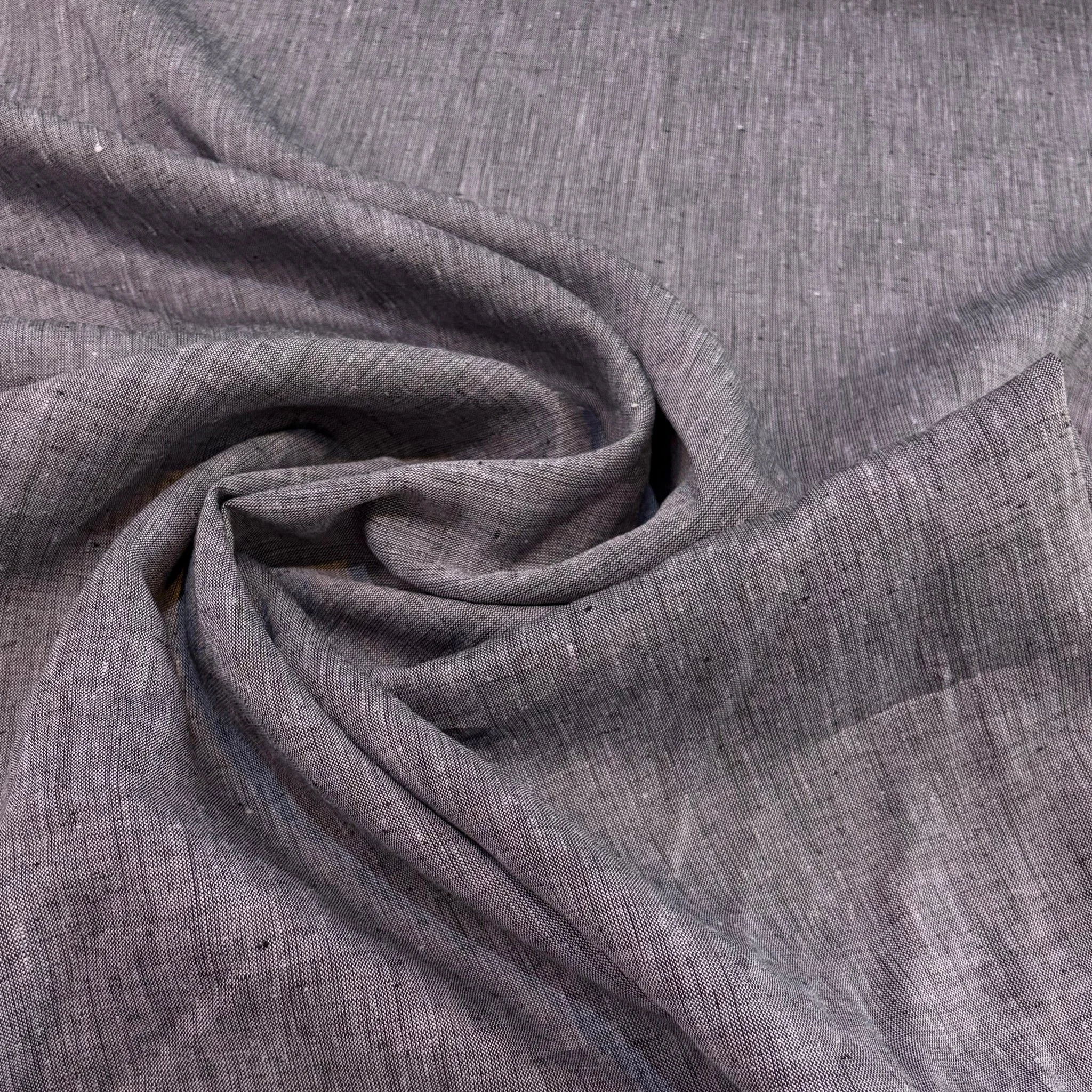
It’s good to have inexpensive fabric yardage around for mockups and test sewing. Many designers use muslin, a tightly woven, unbleached cotton.
Alternatively, you can use old bedsheets or any fabric you have on hand that you don’t mind experimenting with.
Local Fabric Stores in Seattle
I prefer to shop for fabric in person. Here’s a list of all of the fabric stores I know of, in and around Seattle:
Stitches in Capitol Hill
https://stitchesseattle.com
Pacific Fabric in SODO
https://www.pacificfabrics.com
Our Fabric Stash in Pike Place Market
https://ourfabricstash.com/shop/
Wool Friends in Ballard
https://www.wool-friends.com/s/shop
Fabrics for Less in Renton
https://www.facebook.com/fabrisforless/
Wyldwood Creative in Renton
https://wyldwoodcreative.com/collections/all-fabric
Esther’s Fabrics on Bainbridge Island
https://esthersfabrics.com
Online Fabric Shopping
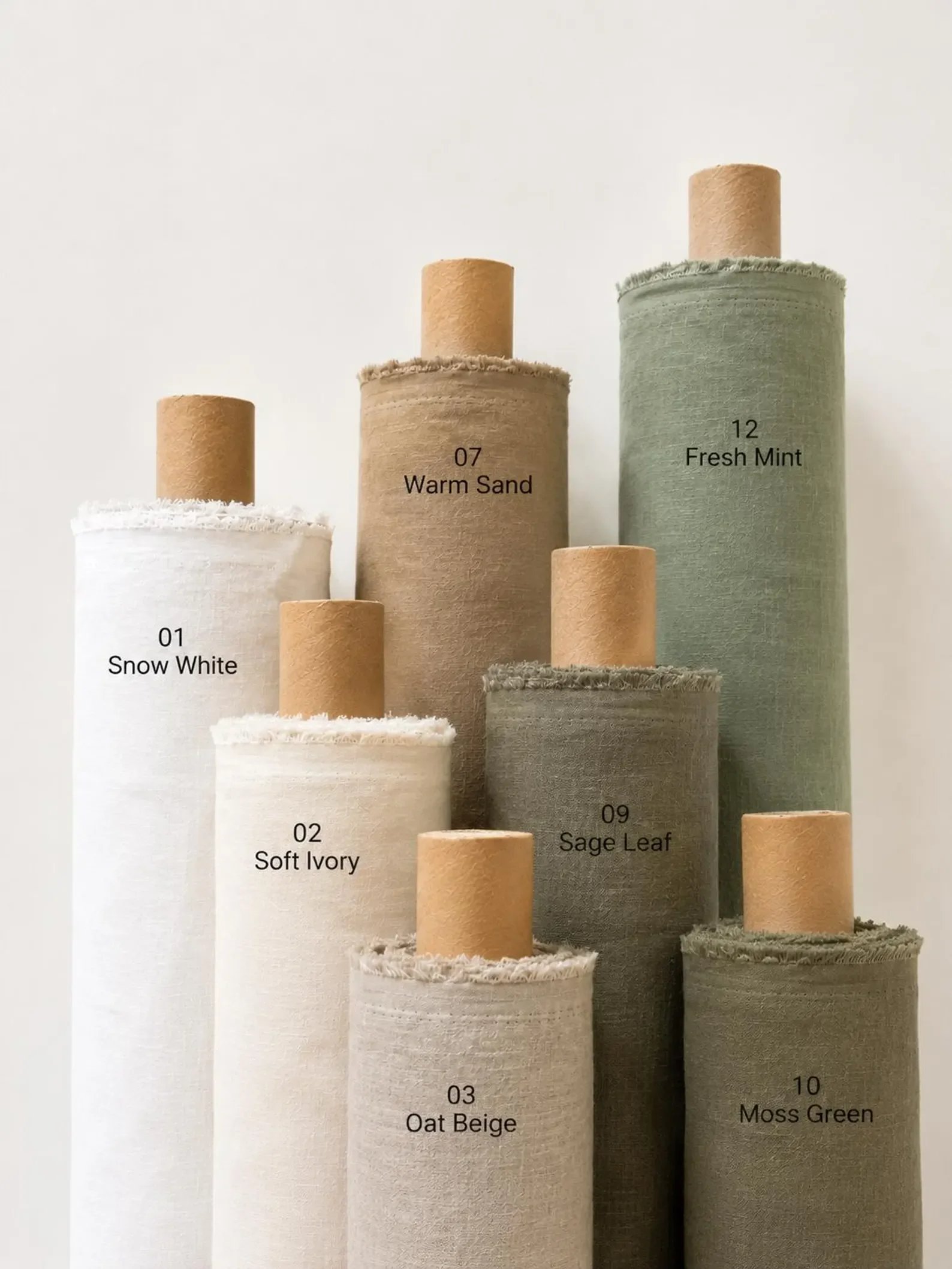
If you shop online for fabric, you can usually order a small sample swatch of something you are interested in to see the color, weight, movement, and weave or knit structure before you buy it in a larger quantity. This slows down the shopping process but it might end up saving you from making a blind purchase you will regret.
Start with an internet search, ask your sewing community where they shop, or try searching on Etsy for fabric vendors. I find a lot of fabric and trims on Etsy that I can’t source locally.
SEWING MACHINES
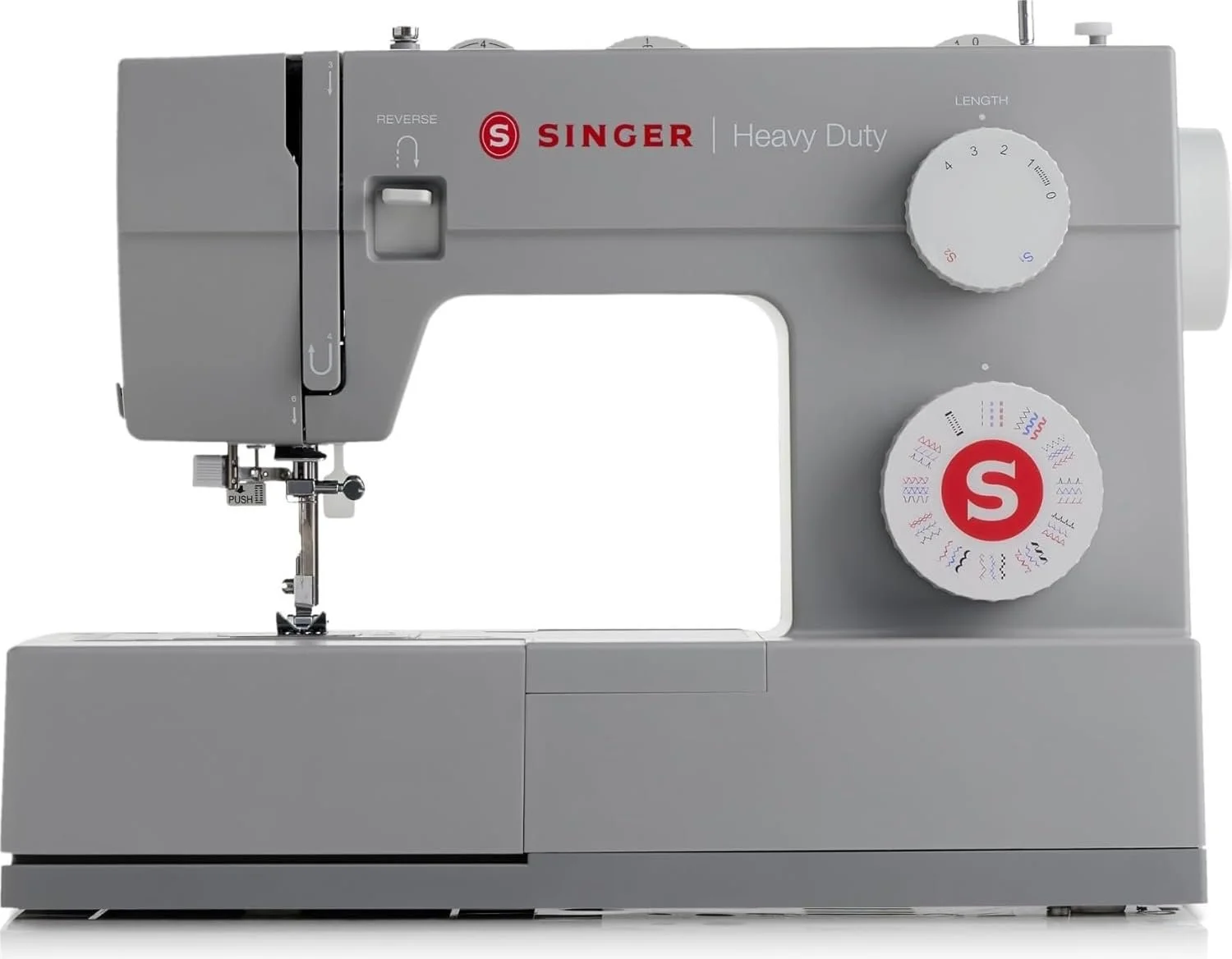
Singer Heavy Duty 4452
This is the sewing machine that I use for teaching lessons in my classroom. It’s a solid workhorse machine with a moderate amount of stitch selections. It has stretch stitch options, straight stitch, zigzag, some decorative stitches, and a buttonhole program.
It sews through leather, and if you ever upgrade this could become your second machine for alternative materials and art projects (if you need something like that).
It does not have a computer interface, which means getting it serviced will be less expensive. The way it sews and handles is kind of clunky but it’s consistent and a great machine to start on.
Make sure you get the model with the stretch stitch options. There is a slightly less expensive model that looks similar but does not have the stretch stitches.
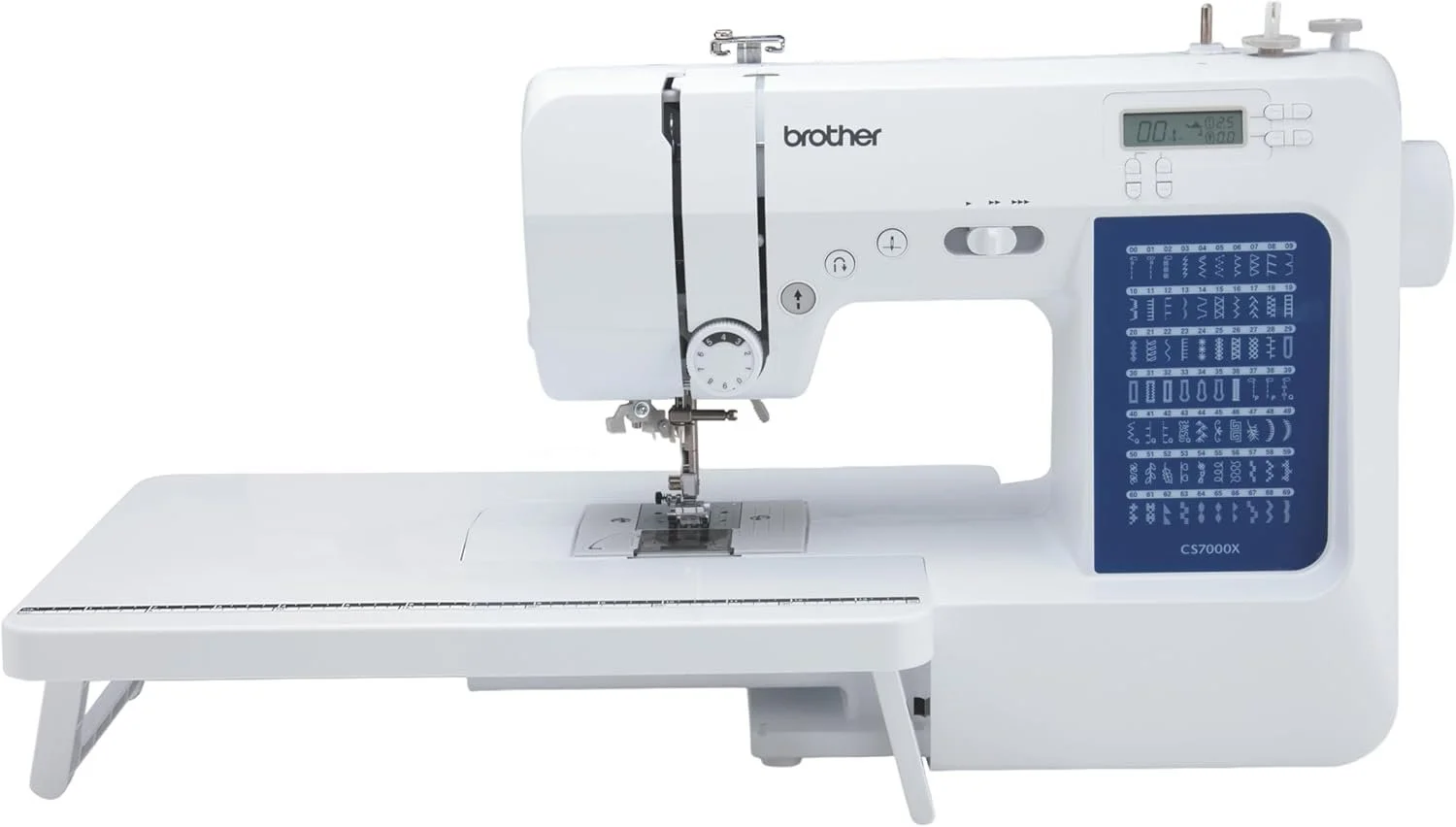
Brother CS7000X and CS5055
A lot of people come across the Brother CS7000X when they are searching for their first sewing machine and I have to say I kind of agree that it’s a good machine to start on. It sews and handles really smoothly. It comes with a full, printed instruction manual that is thorough and clear to follow (as clear as a sewing machine manual ever is).
The digital interface will make servicing and repairs a little more expensive when it is time to take your machine in to the shop, but it does allow for a wider range of stitch options. The switch to control the sewing speed is helpful for beginners who haven’t gotten the hang of moderating foot pedal pressure yet, and it comes with eight different shapes of buttonholes.
I have taught a lot of new sewists to use this machine, but I have never owned one myself so I can’t speak to how well it will hold up over its life span.
The Brother CS5055 is a similar model, also pretty basic and easy to use with variations that make it cost less. I don’t mind this machine either! It’s a good price for what it is.
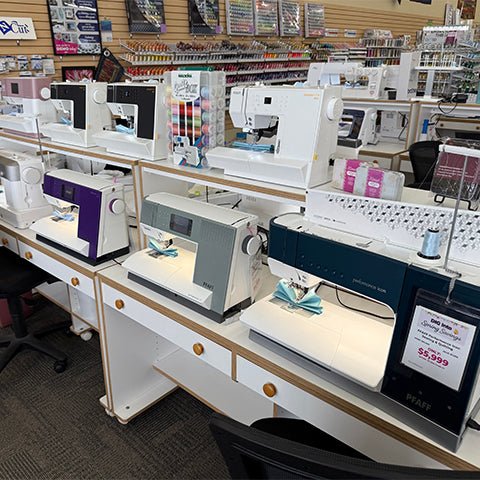
Other Options and Repairing/Servicing Machines
Any used or vintage machine that has been serviced and still works would be probably good to start on.
I personally like the brands Juki, Babylock, and Pfaff. In my experience they make great, long lasting machines.
A solid metal vintage machine like a Singer or a White would probably be a good option too, if you don’t need the bells and whistles you would get on a newer machine, like decorative stitches and buttonhole programs.
This is not an exhaustive list by any means. There are a lot of options and everyone is going to have different sewing needs and preferences.
Quality Sewing and Vacuum in Northgate is a local resource for purchasing new or used sewing machines. They have other locations outside of Seattle as well:
https://www.qualitysewing.com/pages/store-locator
The stores have floor models that you can try out and the staff are helpful.
Quality Sewing and Vacuum also repairs and services home sewing machines.
Another great local sewing machine and repair shop is Sewing Machine Services in Renton:
https://www.berninaofrenton.com
They sell, service, and repair both domestic and industrial sewing machines.